
Implode. Transmit. Decode. Regenerate.
Four steps between a file and its copy at the other end.
One process, in three parts
The Implexus process is implosion, transmission and regeneration. Four steps carry it out.
The file is folded into a strand and named by fifteen characters.
ImplodeOnly the descriptor crosses, on any channel that carries text. The file stays where it is.
TransmitThe right to open it is checked, then the file is rebuilt where the cell is present, bit-exact.
Decode, RegenerateOne delivery, start to finish.
Five files go through implosion, transmission and regeneration. Each step stays on screen for as long as it takes to tell.
Transcript
- Intake. Five files leave a hard drive: a film, music, a program, a spreadsheet and a contract. As the vortex draws them in, each one breaks into lettered blocks.
- Deconstruct. Each block is fingerprinted. Blocks the cell already holds simply lock on. Only new blocks add base pairs, so the cell grows by what is new, and nothing else.
- Map. The fingerprints of each file fold together, in pairs, until one root remains. That root is named by fifteen characters: the descriptor.
- Secure. The descriptor snaps shut. On the left, its fifteen characters. On the right, its lock, scrambled like a combination lock. The file never leaves the cell.
- Transmit. Each descriptor is fired into a glass fibre and crosses as light, in microseconds. About thirty-two bytes travel. A terabyte of files stays exactly where it is.
- Identify. At the set-top box, the receptor catches each descriptor and finds its record. A copy that reaches the wrong device has no matching secure element, and stays shut.
- Decode. The grant is checked against the receptor's own secure element, whose secret never leaves the device. Only then does the lock roll back.
- Synthesize. Inside the receiving cell, the second strands are released, and the two strands of every piece pair up again.
- Regenerate. The pieces are assembled, the root is checked and matches, and every file is whole on the screen, bit-exact, the same size as the original.
Rendered from the engine, with its own sound. Files and values are illustrative. Narration to follow.
Change the use case. Change the receptor.
The engine from the film, in your hands. Pick a use case and a receptor, then scroll, drag the bar or press Play. The narration and the arithmetic follow each step.
Open on its own page · Best in full screen: press Full screen in the demo's controls.
Names, counts and the fifteen characters are illustrative.
Four steps between a file and its copy.
Scroll to move a file through the engine. What happens inside each phase stays inside the engine.
- 01Divide
- 02Match
- 03Map
- 04Transmit
- 05Identify
- 06Decode
- 07Synthesize
- 08Regenerate
Divide. The file is cut into pieces at boundaries set by its own content.
Scroll to move a file through the engine. Size is relative and illustrative; no figures are shown. The pieces, the record and the fifteen characters come from the reference model running on a sample.
What each step guarantees
A one-page letter and a petabyte archive both carry fifteen characters.
A message, an API call, a QR code, a line written on paper.
Who may open it, and for how long, against the grant record.
Rebuilt where the cell is present. Bit-exact.
 Transmit
 Implode and Regenerate
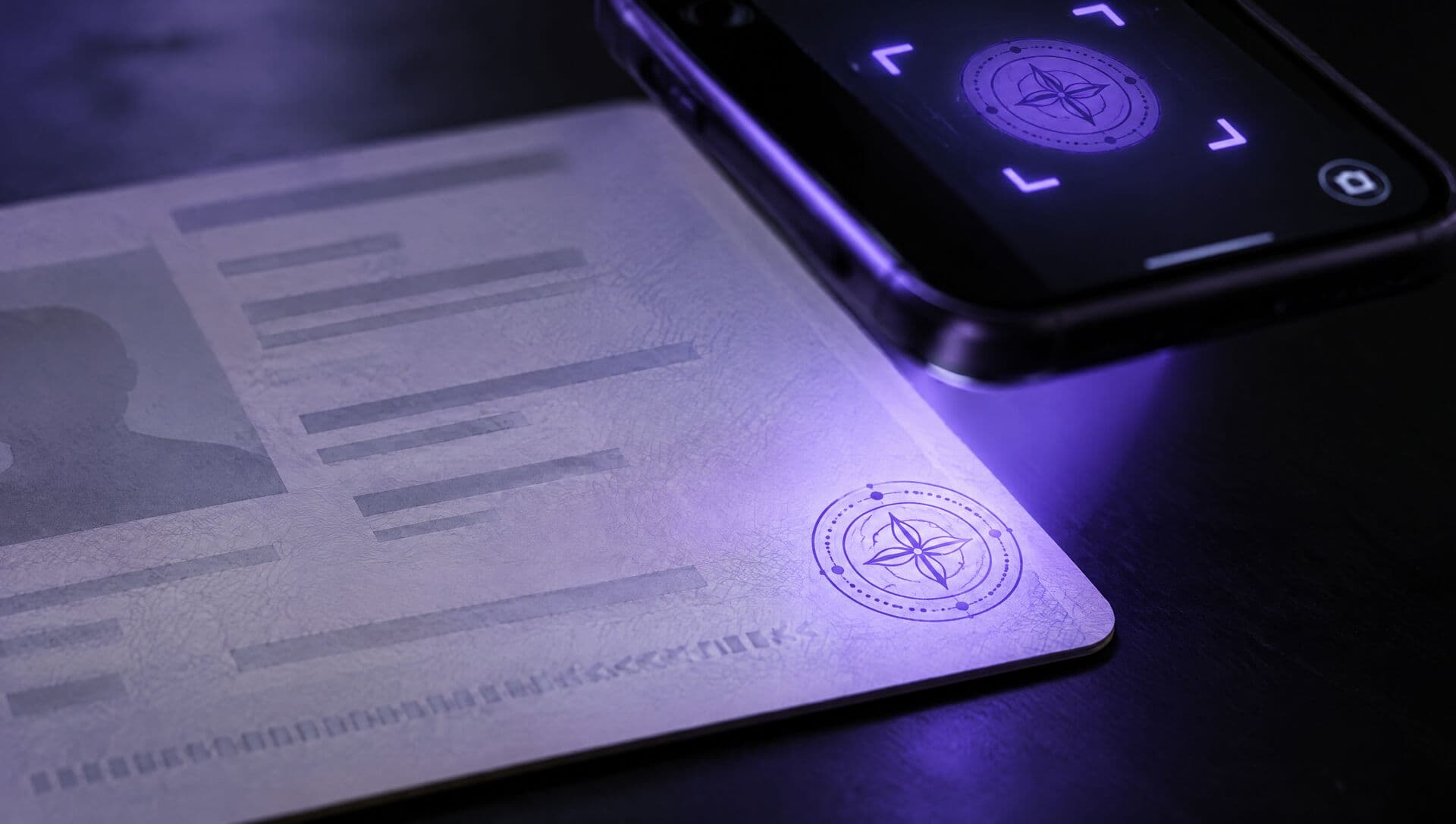 Decode
The size does not change the name
Sizes are examples. Process lengths are illustrative. Independent validation is in progress.
Questions about the four steps
Draft answers. To confirm with engineering.
What does imploded mean?
Folded inward into a strand and named by fifteen characters, with nothing lost. The file is not made smaller and sent; it is named, and regenerated where the cell is present. Implode and Regenerate are the same step run in opposite directions.
What is a strand?
The form the engine holds a file in. It is named by fifteen characters and rebuilt where the cell is present.
Is the descriptor a secret?
No. It names a file; it does not open it. Opening needs the cell and a grant.
What does bit-exact mean?
Every bit of the rebuilt file matches the original. What comes back is what went in.
How long does each step take?
We do not publish process times. Lengths shown on this site are illustrative until independent validation is complete.
See it on your own files.
An evaluation licence, an environment on app.implexus.io, and the SDK.